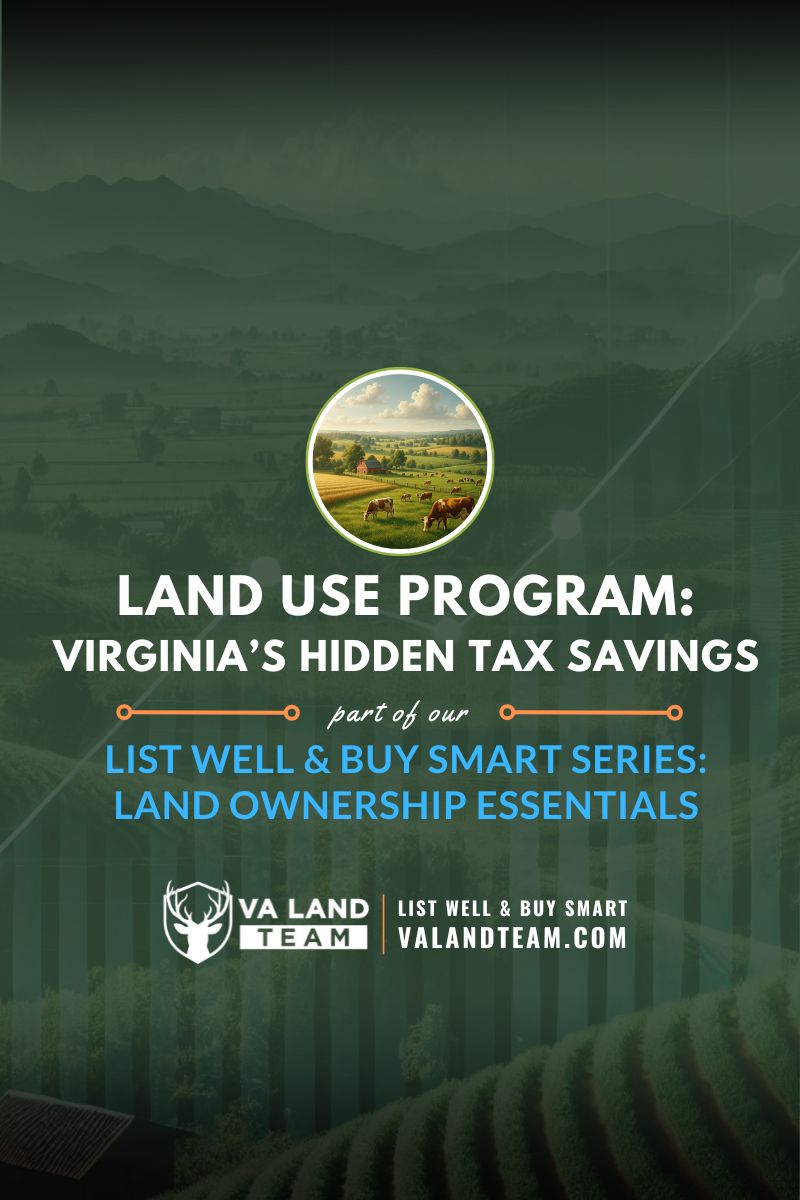
Land Use Program: Virginia’s Hidden Tax Savings
This Is The Overlooked Tax Break Every Virginia Landowner Should Know About
Part of our List Well & Buy Smart Series
Every landowner wants to make the most of their property — and the Virginia Land Use Program is one of the most overlooked opportunities to do it. Designed to reward good stewardship, the program lowers property taxes for qualifying rural landowners while preserving the natural beauty, productivity, and open space that define the Commonwealth.
If you own farmland, timberland, or open acreage, this is one of the smartest ways to keep more money in your pocket and protect the land you love. Around here, we call that the next level of list well & buy smart.
What Is the Virginia Land Use Program?
Virginia’s Land Use Value Assessment (LUVA) Program allows counties to tax qualifying land based on its use value instead of its market value. In other words, your tax bill reflects how your land is used — not how much it might sell for.
The result? Substantial savings for property owners who keep their land in active agriculture, managed forestry, or conservation. Each county sets its own requirements, assessment values, and deadlines, so you’ll need to apply or reapply locally to qualify for the upcoming tax year.
Why This Matters Now
Fall and early winter are when most Virginia counties accept new applications and revalidations for land use taxation. Many local offices set deadlines between November and January for the following year’s eligibility.
If your property is enrolled, it’s important to confirm your annual revalidation deadline. Failure to reapply can remove your parcel from the program — and that can mean higher taxes and possible rollback penalties. (Find general guidance and contacts here.)
Real-World Savings Example
- Property Type: 50-acre farm with 30 acres of pasture, 15 acres of woodland, and 5 acres homesite
- Market Value Assessment: $450,000
- Use Value Assessment: $180,000
- Tax Rate: $0.43 per $100 of assessed value (example rate — actual rates vary by county)
Without land use: 450,000 ÷ 100 × 0.43 = $1,935/year
With land use: 180,000 ÷ 100 × 0.43 = $774/year
That’s a savings of roughly $1,100 per year — money that can go right back into your land for pasture care, fencing, or forest management. Over time, those savings add up.
Note: Tax rates and assessed use values differ by county and change annually. Reference the Virginia Tech LUVA Estimates for your area and confirm details with your local revenue office.
Who Qualifies?
Eligible properties generally fall into one of four categories:
- Agricultural: Working farms, livestock, orchards, or crop operations
- Forest: Managed timberland under a certified forest management plan
- Open Space: Undeveloped or conserved land protecting scenic or recreational value
- Horticultural: Vineyards, nurseries, and similar agricultural enterprises
Most counties require 5–20 acres, depending on category, and documentation such as farm income records, a forest management plan, or proof of conservation use.
🏡 LIST WELL: Tips for Sellers
- Confirm current enrollment status. Verify your parcel’s classification, renewal date, and compliance with your local Commissioner of the Revenue.
- Disclose enrollment to buyers. Include the land use status in your listing remarks or addenda so buyers understand ongoing requirements.
- Understand rollback taxes. If the property is removed from land use or reclassified at closing, counties can assess rollback taxes covering up to five years of prior savings. Learn more in the Virginia Rollback Taxes.
- If your property is currently on the market: Stay proactive with revalidation — don’t assume the buyer will handle it. Renewing while listed keeps your land compliant, prevents penalties, and signals responsible ownership.
- Time your sale wisely. If you’re planning to close around the renewal deadline, coordinate with your agent to ensure the reapplication is filed on time or properly transferred.
🌾 BUY SMART: Tips for Buyers
- Check the revalidation schedule. Most counties require annual reapplication to maintain eligibility.
- Confirm ongoing use eligibility. The land’s classification must continue after closing — changes like home construction or clearing may affect qualification.
- Ask about rollback exposure. If your planned use doesn’t qualify, you may owe back taxes for the previous five years of savings.
- Plan for stewardship. Land use enrollment goes hand in hand with land management. Buyers who maintain the qualifying use enjoy years of reduced taxes and healthier land.
Where to Learn More
Virginia Tech’s LUVA Program (Land Use Value Assessment) maintains an excellent collection of county-level resources, including brochures and the 2026 use value estimates used by local assessors. Explore the data and find links to your county’s tax office and application details there.
Stewardship in Action
Enrolling in the Land Use Program isn’t just about saving money — it’s about protecting Virginia’s rural legacy. Every acre under land use represents clean water, open views, wildlife habitat, and a deeper connection between people and the land.
When managed wisely, land use enrollment becomes both a tax strategy and a conservation tool — a way to save money, preserve your property’s character, and ensure it thrives for generations to come.
Because at the end of the day, being a good landowner means being a good steward — and that’s how you list well & buy smart.
📲 | Call VA Land Team at 540-485-LAND (5263)
💻 | Visit www.valandteam.com for more of Virginia’s best rural real estate. We’ll help you list well & buy smart!
Disclaimer: The information provided in this article is for general informational purposes only and should not be considered tax, financial, legal, or professional advice. Market conditions and local regulations are subject to change. Property owners should consult with licensed professionals or their local Commissioner of the Revenue for specific guidance. The Virginia Land Team provides real estate advice based on experience in the rural Virginia market but encourages all clients to do their own research and seek professional assistance as needed.